
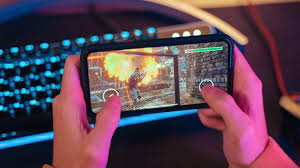
In recent years, mobile gaming has grown into a multi-billion-dollar industry, reshaping how we view gaming. What was once seen as a casual pastime is now a powerful force in the entertainment sector. One of the driving forces behind this transformation is the stunning advancements in mobile game graphics. With new technological innovations, developers are pushing the boundaries of what’s possible on mobile devices, creating visually captivating experiences that rival those of console and PC games. So, why are mobile game graphics more impressive than ever? Let’s dive into the key factors that have contributed to this remarkable evolution.
1. Powerful Mobile Hardware: The Heart of the Revolution
The performance of mobile devices has improved drastically over the past decade, and this is perhaps the most significant reason behind the leap in mobile game graphics. Modern smartphones, particularly high-end models, come equipped with cutting-edge processors, advanced graphics units (GPUs), and copious amounts of RAM. These components allow mobile devices to handle highly detailed textures, complex lighting, and intricate environments with ease.
For instance, Apple’s A-series chips and Qualcomm’s Snapdragon processors have been key players in driving mobile gaming graphics to new heights. These processors are equipped with highly efficient GPUs that support technologies like Metal (for iOS devices) and Vulkan (for Android), which are optimized for rendering high-quality graphics. With this level of power, developers can now create visually stunning worlds with intricate details, smooth animations, and realistic lighting.
The advent of 5G technology also plays a role in improving mobile game graphics. With faster internet speeds, mobile games can now feature larger, more expansive worlds and higher-quality assets that were previously impossible to deliver through slower networks.
2. Real-Time Rendering and Advanced Graphics Techniques
Mobile game graphics have benefited greatly from advanced rendering techniques that have long been used in console and PC games. Real-time rendering has become a major factor in improving the quality of mobile games. This technique allows game developers to create graphics on the fly, rendering environments and characters in real-time as players move through the game world.
Techniques such as ray tracing, which simulates the way light interacts with objects in a scene, have made their way into mobile games, creating photorealistic lighting effects. Ray tracing enables the simulation of reflections, shadows, and ambient light, making games appear more lifelike. While ray tracing is traditionally reserved for high-end gaming PCs and consoles, mobile devices are now capable of supporting it, thanks to the powerful hardware inside modern smartphones.
Another game-changer is global illumination, which simulates the interaction of light with surfaces in a game scene, adding a sense of realism. These advancements allow developers to create environments that feel more immersive, with lighting and shadows that respond naturally to changes in the environment, such as time of day or weather conditions.
3. High-Resolution Displays: A Visual Feast for Gamers
The introduction of high-resolution displays in mobile devices has played a huge role in enhancing the visual quality of mobile games. With modern smartphones offering screen resolutions ranging from Full HD (1080p) to 4K, the sharpness and clarity of mobile game graphics have reached impressive new levels. This ultra-high-definition display capability allows games to showcase intricate details, vivid colors, and smoother animations.
Furthermore, OLED (Organic Light Emitting Diode) and AMOLED (Active Matrix Organic Light Emitting Diode) screens, found in many flagship smartphones, provide better contrast ratios, deeper blacks, and more vibrant colors than traditional LCD screens. This means that mobile games with stunning graphics can now take full advantage of the color depth and contrast these displays offer, making environments look more realistic and immersive.
For example, popular mobile games like PUBG Mobile and Genshin Impact have benefited from these high-resolution screens, delivering an exceptional visual experience. Whether it’s a dark dungeon or a sun-drenched open world, the graphics are more immersive and lifelike than ever before.
4. Optimized Game Engines for Mobile Platforms
Another critical factor contributing to the impressive graphics in mobile gaming is the optimization of game engines. Game engines like Unreal Engine and Unity have been fine-tuned for mobile platforms, allowing developers to create high-quality graphics that perform smoothly on smartphones and tablets. These engines enable developers to leverage advanced graphics features such as real-time reflections, detailed character models, and dynamic weather systems, all without compromising performance.
Unreal Engine 5, in particular, has introduced groundbreaking technology like Nanite (a virtualized geometry system) and Lumen (a fully dynamic global illumination system), which together create photorealistic environments. While these features were initially designed for high-end gaming consoles and PCs, they are now being adapted for mobile platforms, allowing for console-quality graphics on your smartphone.
Similarly, Unity’s versatile platform provides support for high-definition graphics, photorealistic textures, and advanced particle effects, all of which contribute to the eye-catching visual quality of mobile games. The accessibility and versatility of these engines have enabled even smaller studios to develop games with stunning visuals.
5. Artificial Intelligence and Machine Learning in Game Development
Artificial intelligence (AI) and machine learning (ML) have had a significant impact on game graphics, and mobile games are no exception. AI is increasingly being used to enhance the realism of game worlds by improving animation, character behavior, and environmental interactions. Machine learning algorithms can analyze game environments and automatically generate realistic textures, models, and lighting effects, reducing the time and effort required to create lifelike visuals.
Moreover, AI-driven techniques like procedural generation allow game worlds to be created on the fly, resulting in environments that feel unique and dynamic. This also means that game developers can push the graphical fidelity of mobile games without overloading the hardware. For example, AI can help upscale low-resolution textures, improve frame rates, and optimize rendering techniques to create high-quality graphics that run smoothly on mobile devices.
In addition, AI is helping create more lifelike animations by using motion capture data, facial recognition, and neural networks. This enables characters in mobile games to move and react with an unprecedented level of realism, further immersing players in the experience.
6. Innovative Art Styles and Visual Design
While technological advancements play a significant role in the improvement of mobile game graphics, innovative art styles and visual design choices have also contributed to the overall visual appeal. Developers are increasingly experimenting with unique art styles that blend realism with artistic expression. Games like Monument Valley and Ori and the Blind Forest have proven that beautiful graphics don’t always have to be photorealistic.
Stylized visuals, cel-shading, and minimalist designs have become popular in mobile games, offering players visually distinct worlds that stand out. These art styles can help mobile games run more efficiently while still looking stunning. For example, the use of flat colors, geometric shapes, and exaggerated character designs in games like Super Mario Run or Clash Royale not only makes them visually appealing but also ensures that the games run smoothly on mobile devices with less graphical strain.
By embracing various artistic approaches, mobile game developers can create visually striking worlds that are both beautiful and optimized for mobile platforms.
7. Cloud Gaming: Bringing Console-Quality Graphics to Mobile Devices
Cloud gaming has revolutionized how we play games, and it’s also helping mobile games achieve console-quality graphics. With cloud gaming services like Google Stadia, NVIDIA GeForce Now, and Xbox Cloud Gaming, players can stream games from powerful servers to their mobile devices, bypassing the limitations of local hardware.
Cloud gaming allows mobile devices to run graphically intensive games that would otherwise be too demanding for smartphones. Players can enjoy the graphics of a high-end PC or console game, such as Cyberpunk 2077 or Red Dead Redemption 2, all from the comfort of their mobile device. As 5G networks continue to expand and improve, cloud gaming will only become more seamless, providing mobile gamers with even better visual experiences.
8. The Future of Mobile Game Graphics
Looking ahead, the future of mobile game graphics is incredibly exciting. With the continuous evolution of hardware, game engines, and artificial intelligence, mobile games will continue to push the envelope of what’s possible in terms of visual fidelity. Innovations such as augmented reality (AR) and virtual reality (VR) will also play a major role in shaping the visual experiences of mobile games.
As smartphones continue to evolve and as cloud gaming technology matures, we can expect even more impressive and immersive mobile game graphics that will continue to blur the lines between mobile, console, and PC gaming.
Conclusion
In conclusion, mobile game graphics have evolved dramatically, thanks to advances in hardware, real-time rendering techniques, high-resolution displays, and optimized game engines. Developers now have access to powerful tools that allow them to create stunning, immersive worlds that run smoothly on smartphones and tablets. Whether it’s realistic lighting effects, detailed textures, or innovative art styles, mobile games are offering visuals that are more impressive than ever before.
As technology continues to improve, we can only expect mobile game graphics to get even better, pushing the boundaries of what we thought possible on a handheld device. Whether you’re a casual gamer or a hardcore enthusiast, the future of mobile gaming is incredibly bright, and the graphics are just the beginning of an exciting journey into the world of mobile entertainment.